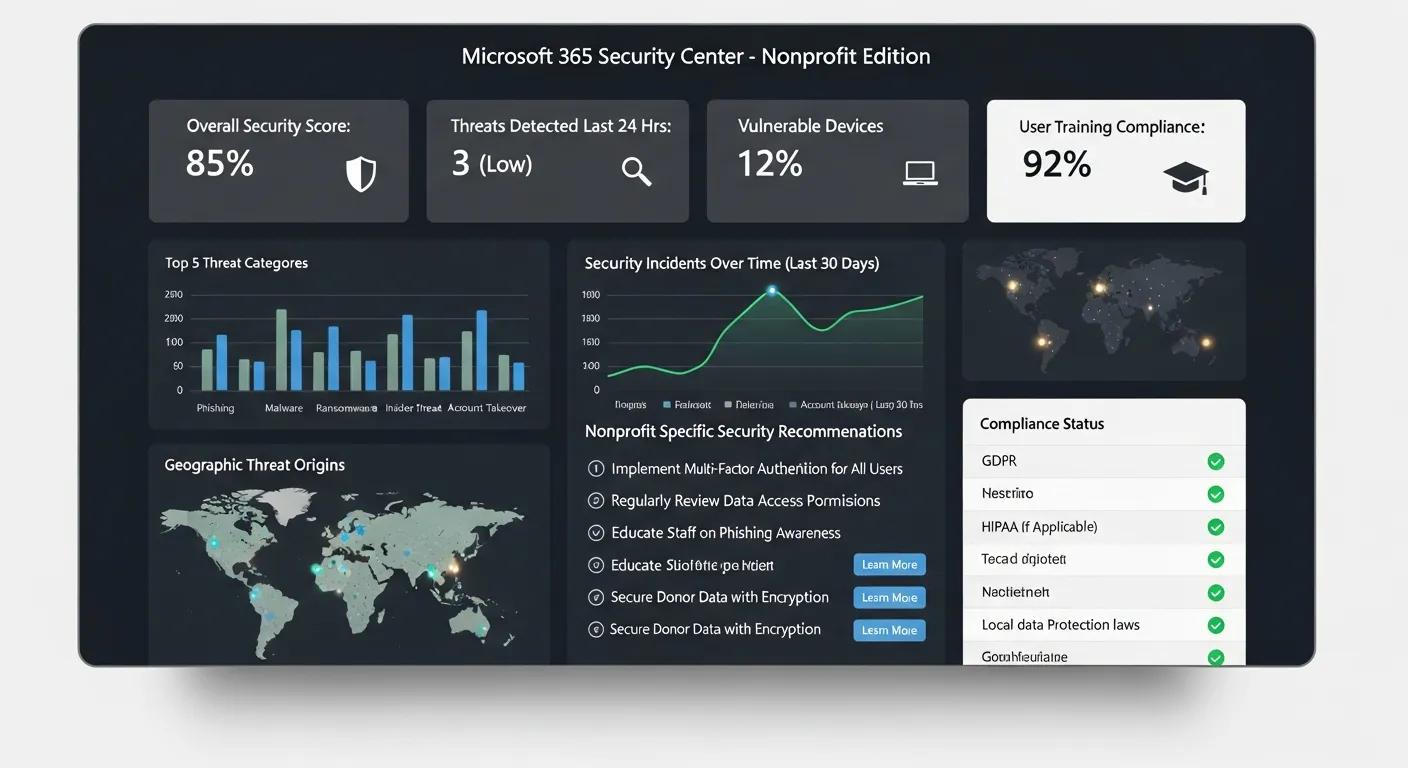
Microsoft 365 Cybersecurity Solutions for Nonprofits
Microsoft 365 Cybersecurity Solutions for Nonprofits: Protecting Data and Ensuring Compliance
In an increasingly digital world, nonprofits face unique challenges in safeguarding their data and ensuring compliance with regulatory standards. Nonprofit IT San Antonio leverages Microsoft 365 Security solutions tailored to meet the specific needs of nonprofit organizations. Nonprofit IT San Antonio plays a crucial role in helping these organizations protect their sensitive information and maintain operational integrity. This article will explore how these solutions can protect sensitive information, enhance operational efficiency, and ensure compliance with various regulations. Nonprofits often struggle with limited resources and heightened vulnerability to cyber threats, making robust cybersecurity measures essential. By leveraging Microsoft 365's features and expert support from Nonprofit IT San Antonio, nonprofits can effectively mitigate risks and enhance their overall security posture. We will delve into key areas such as data protection measures, compliance standards, backup solutions, and the importance of ongoing training and support.

This vulnerability is a significant concern, as many organizations may not even be aware of their security gaps.
Nonprofit Cybersecurity: Microsoft's View on Vulnerabilities
Recent studies indicate that approximately 70 percent of nonprofit organizations have yet to conduct a comprehensive risk assessment to identify potential vulnerabilities in their technology infrastructure.CISA.gov, 2025
Data Protection and Security Measures with Microsoft 365 Security for Nonprofit IT San Antonio
Data protection is paramount for nonprofits, as they handle sensitive information that must be safeguarded against unauthorized access and breaches. Microsoft 365 Security provides a range of security measures designed to protect this data effectively. Key features include encryption of sensitive data, implementation of access controls, and the configuration of Multi-Factor Authentication (MFA) to enhance security and threat protection.
The critical need for robust cybersecurity, including measures like Multi-Factor Authentication, remains a key focus for nonprofits supported by Nonprofit IT San Antonio.
Critical Cybersecurity for Nonprofits: ZTA, NIST CSF, and MFA
Recent research highlights the integration of Zero Trust Architecture (ZTA) and the National Institute of Standards and Technology Cybersecurity Framework (NIST CSF) within nonprofit organizations to strengthen cybersecurity postures. The surge in cyber threats during recent years has underscored the importance of adopting Multi-Factor Authentication (MFA) and comprehensive frameworks to protect sensitive data.NIST.gov, 2026

MFA adds an additional layer of security by requiring users to provide two or more verification factors to gain access to their accounts. This significantly reduces the risk of unauthorized access, especially in an environment where phishing attacks are prevalent. Furthermore, Microsoft 365's data loss prevention (DLP) policies help organizations identify and protect sensitive information, ensuring that it is not inadvertently shared or exposed.
Microsoft's Data Loss Prevention (DLP) service is specifically designed to address these concerns by detecting and preventing the unauthorized sharing of sensitive data.
Microsoft 365 DLP for Sensitive Data Protection
The Microsoft Data Loss Prevention (DLP) service detects and prevents the sharing of sensitive data both internally and externally through the Microsoft 365 platform.
Microsoft for Nonprofits, 2025
Compliance with Regulatory Standards for Nonprofit IT San Antonio Clients:
Nonprofits must navigate a complex landscape of regulatory requirements, including HIPAA, PCI DSS, and GDPR. Microsoft 365 assists organizations in aligning their operations with these standards through built-in compliance tools and features. Regular audits and compliance checks are facilitated by the platform, ensuring that nonprofits can maintain adherence to necessary regulations with the support of Nonprofit IT San Antonio.
The importance of compliance cannot be overstated, as failure to meet these standards can result in significant penalties and damage to an organization's reputation. By utilizing Microsoft 365, nonprofits can streamline their compliance processes and focus on their mission rather than getting bogged down by regulatory challenges.
Backup and Disaster Recovery:
Effective backup and disaster recovery solutions are critical for nonprofits to ensure business continuity in the event of data loss or cyber incidents. Microsoft 365 offers automated backup solutions that allow organizations to recover data quickly and efficiently. Point-in-time restore capabilities enable nonprofits to revert to previous versions of their data, minimizing the impact of accidental deletions or ransomware attacks.
The importance of disaster recovery cannot be overlooked, as it provides a safety net for organizations to recover from unforeseen events. By implementing robust backup strategies, nonprofits can safeguard their data and maintain operational resilience.
Training and Awareness with Threat Protection Focus by Nonprofit IT San Antonio
Staff training is a vital component of any cybersecurity strategy. Nonprofits must foster a culture of security awareness among their employees to mitigate risks effectively. Microsoft 365 provides resources and tools to facilitate training on compliance and best practices for data handling, including threat protection techniques.
Regular training sessions can help staff recognize potential threats, such as phishing attempts, and understand the importance of safeguarding sensitive information. By promoting a security-conscious culture, nonprofits can significantly reduce the likelihood of successful cyberattacks with guidance from Nonprofit IT San Antonio.
Incident Response and Monitoring:
Having a well-defined incident response plan is essential for nonprofits to address potential security breaches swiftly. Microsoft 365 offers monitoring tools that help organizations detect cyber threats in real-time, allowing for prompt action to mitigate risks. Incident response plans should outline the steps to take in the event of a breach, ensuring that all staff members are prepared to respond effectively.
Ensuring business continuity during a cyber incident is crucial, and having a proactive approach to incident response can make all the difference in minimizing damage and restoring operations.
Ongoing Support and Management:
Post-migration support is vital for nonprofits to ensure that their cybersecurity measures remain effective over time. Microsoft 365 provides ongoing support, including troubleshooting assistance, regular check-ins, and updates on new features. This continuous management helps organizations stay ahead of emerging threats and adapt their security strategies accordingly.
By leveraging the ongoing support offered by Microsoft 365 and Nonprofit IT San Antonio, nonprofits can maintain a robust cybersecurity posture and focus on their core mission without the constant worry of potential vulnerabilities.

Enhance Your Nonprofit's Cybersecurity Today with Nonprofit IT San Antonio
Discover how Microsoft 365 migration and tailored Nonprofit IT San Antonio support can strengthen your organization's cybersecurity and compliance efforts. For expert assistance with setup and migration, explore Microsoft 365 migration services in San Antonio designed specifically for nonprofits.
What Are the Key Cybersecurity Challenges Facing Nonprofits?
Nonprofits face several cybersecurity challenges that can hinder their operations and compromise sensitive data. Key challenges include:
- Data Protection Issues: Many nonprofits lack the resources to implement comprehensive data protection measures, making them vulnerable to breaches.
- Vulnerabilities in Outdated Systems: Nonprofits often operate on legacy systems that may not receive regular updates, exposing them to security risks.
- Compliance Challenges: Navigating complex regulatory requirements can be daunting for nonprofits, especially those with limited staff and expertise.
Addressing these challenges is essential for nonprofits to protect their data and maintain trust with their stakeholders.
Why Is Data Protection Critical for Nonprofit Organizations?
Data protection is critical for nonprofit organizations for several reasons:
- Risks of Data Breaches: Nonprofits often handle sensitive donor information, making them attractive targets for cybercriminals. A data breach can lead to financial loss and reputational damage.
- Compliance Requirements: Many nonprofits are subject to strict data protection regulations that require them to implement specific security measures. Failure to comply can result in legal penalties.
- Impact on Donor Trust: Maintaining donor trust is vital for nonprofits. A data breach can erode confidence in an organization, leading to decreased donations and support.
By prioritizing data protection, nonprofits can safeguard their operations and maintain the trust of their supporters.
What Common Cyber Threats Target Nonprofits?
Nonprofits are increasingly targeted by various cyber threats, including:
- Ransomware Attacks: Cybercriminals may encrypt an organization's data and demand a ransom for its release, disrupting operations and causing financial strain.
- Phishing Attempts: Nonprofits are often targeted by phishing emails that attempt to trick employees into revealing sensitive information or credentials.
- Misconfigured Cloud Services: Improperly configured cloud services can expose sensitive data to unauthorized access, putting organizations at risk.
Understanding these threats is crucial for nonprofits to implement effective cybersecurity measures.
How Does Microsoft 365 Enhance Cybersecurity for Nonprofits?
Microsoft 365 enhances cybersecurity for nonprofits through several key features:
- Multi-Factor Authentication: MFA adds an extra layer of security, requiring users to verify their identity through multiple methods.
- Conditional Access Policies: These policies allow organizations to control access to sensitive data based on user location, device, and risk level.
- Microsoft Defender: This comprehensive security solution provides advanced threat protection, helping organizations detect and respond to cyber threats in real-time.
By leveraging these features, nonprofits can significantly improve their cybersecurity posture and protect sensitive information.
Which Microsoft 365 Security Features Safeguard Nonprofit Data?
Microsoft 365 offers a variety of security features designed to safeguard nonprofit data, including:
- Advanced Threat Protection: This feature helps detect and respond to potential threats before they can cause harm.
- Data Loss Prevention: DLP policies help organizations identify and protect sensitive information from being shared inappropriately.
- Regular Security Audits: Microsoft 365 provides tools for conducting regular security audits, ensuring that organizations remain compliant with regulatory standards.
These features work together to create a robust security framework for nonprofits.
How Do Multi-Factor Authentication and Defender Improve Protection?
Multi-Factor Authentication (MFA) and Microsoft Defender play crucial roles in enhancing protection for nonprofits:
- MFA as an Access Security Measure: By requiring multiple forms of verification, MFA significantly reduces the risk of unauthorized access to sensitive data.
- Defender's Threat Detection Capabilities: Microsoft Defender continuously monitors for potential threats, allowing organizations to respond quickly to incidents.
- Impact on Overall Security: Together, these tools create a layered security approach that helps nonprofits protect their data and maintain compliance.
Implementing MFA and utilizing Microsoft Defender are essential steps for nonprofits to enhance their cybersecurity measures.
What Compliance Requirements Must Nonprofits Meet Using Microsoft 365?
Nonprofits using Microsoft 365 must adhere to various compliance requirements, including:
- HIPAA and GDPR Compliance: Organizations must ensure that they handle sensitive data in accordance with these regulations, which include specific security measures and reporting requirements.
- Audit Logging and Alerts: Regular audits and alerts help organizations monitor compliance and identify potential issues before they escalate.
- Staff Training on Compliance: Ensuring that staff members are trained on compliance requirements is essential for maintaining adherence to regulations.
By understanding and meeting these compliance requirements, nonprofits can protect their data and avoid potential penalties.
How Can Nonprofits Benefit from Managed IT Security Services in San Antonio?
Managed IT security services offer several benefits for nonprofits, including:
- Tailored Configuration and Support: Managed services can customize security solutions to meet the unique needs of each nonprofit organization.
- Cost Predictability: By outsourcing IT security, nonprofits can better manage their budgets and avoid unexpected expenses related to cybersecurity incidents.
- Compliance Advantages: Managed service providers often have expertise in compliance, helping nonprofits navigate complex regulations more effectively.
Utilizing managed IT security services can significantly enhance a nonprofit's cybersecurity posture. For expert assistance, consider Nonprofit IT San Antonio managed services tailored to your organization's needs.
What Advantages Do Local Managed Security Services Provide?
Local managed security services offer distinct advantages for nonprofits, such as:
- Enhanced Cybersecurity Measures: Local providers understand the specific challenges faced by nonprofits in their area and can tailor solutions accordingly.
- Proactive Monitoring and Support: Local services often provide continuous monitoring and support, ensuring that organizations are protected against emerging threats.
- Cost-Effective Solutions: By leveraging local resources, nonprofits can access high-quality security services without the high costs associated with larger providers.
These advantages make local managed security services an attractive option for nonprofits seeking to enhance their cybersecurity.
How Does Evolution Technologies Tailor Cybersecurity for San Antonio Nonprofits?
Evolution Technologies specializes in providing tailored cybersecurity solutions for nonprofits in San Antonio. By understanding the unique needs of local organizations, they offer cost-effective solutions that streamline IT processes and enhance security. Their expertise in managed IT services ensures that nonprofits can focus on their mission while maintaining a robust cybersecurity posture.
Recognized as a G2 Verified provider, Evolution Technologies delivers trusted and proven cybersecurity services tailored to the nonprofit sector.
Through customized strategies and ongoing support, Evolution Technologies helps San Antonio nonprofits navigate the complexities of cybersecurity, ensuring compliance and protecting sensitive data.
What Strategies Improve Cloud Security for Nonprofits Using Microsoft 365?
To improve cloud security, nonprofits using Microsoft 365 should consider the following strategies:
- Data Encryption: Encrypting sensitive data both in transit and at rest helps protect it from unauthorized access.
- Access Controls: Implementing strict access controls ensures that only authorized personnel can access sensitive information.
- Regular Security Audits: Conducting regular audits helps identify vulnerabilities and ensures compliance with regulatory standards.
By adopting these strategies, nonprofits can enhance their cloud security and protect their data effectively.
How to Secure Cloud Migration and Data Storage Effectively?
Securing cloud migration and data storage involves several key steps:
- Robust Encryption: Ensuring that data is encrypted during migration protects it from interception and unauthorized access.
- Access Controls: Implementing strict access controls during and after migration helps safeguard sensitive information.
- Regular Security Audits: Conducting audits post-migration ensures that security measures remain effective and compliant with regulations.
These steps are essential for nonprofits to secure their data during cloud migration and storage. For expert guidance, explore Microsoft 365 migration services designed for nonprofits.
What Role Does Continuous Risk Assessment Play in Cloud Security?
Continuous risk assessment is vital for maintaining cloud security, as it allows organizations to:
- Identify Weaknesses: Regular assessments help nonprofits identify vulnerabilities in their security posture.
- Implement Safeguards: By understanding potential risks, organizations can implement appropriate safeguards to protect their data.
- Improve Compliance: Continuous risk assessment ensures that nonprofits remain compliant with regulatory standards by addressing potential issues proactively.
This proactive approach to risk management is essential for nonprofits to maintain a strong security posture.
How Can Nonprofits Implement Effective Cybersecurity Training and Support?
To implement effective cybersecurity training and support, nonprofits should focus on:
- Regular Employee Training Programs: Providing ongoing training helps staff stay informed about the latest threats and best practices.
- Phishing Simulations: Conducting phishing simulations can help employees recognize and respond to potential threats effectively.
- Promoting Best Practices: Encouraging a culture of security awareness among staff is essential for reducing risks.
By prioritizing training and support, nonprofits can enhance their cybersecurity measures and protect sensitive data.
What Training Programs Enhance Staff Awareness and Security Practices?
Training programs that enhance staff awareness and security practices include:
- Regular Updates and Assessments: Keeping staff informed about the latest cybersecurity trends and threats is crucial for maintaining awareness.
- Creating a Security-Conscious Culture: Fostering a culture of security within the organization encourages employees to prioritize data protection.
- Utilizing Managed IT Services: Partnering with managed IT service providers can offer additional training resources and support.
These programs are essential for ensuring that staff members are equipped to handle potential cybersecurity threats effectively.
How Does Ongoing IT Consulting Strengthen Nonprofit Cybersecurity?
Ongoing IT consulting plays a critical role in strengthening nonprofit cybersecurity by:
- Tailored Cybersecurity Strategies: Consultants can develop customized strategies that address the unique needs of each nonprofit organization.
- Regular Security Assessments: Ongoing assessments help identify vulnerabilities and ensure that security measures remain effective.
- Incident Response Planning: Consultants can assist nonprofits in developing comprehensive incident response plans to address potential breaches.
By leveraging ongoing IT consulting, nonprofits can enhance their cybersecurity posture and protect sensitive data effectively.
Secure Your Nonprofit’s Future with Expert IT Support from Nonprofit IT San Antonio
Partner with Nonprofit IT San Antonio experts at Evolution Technologies, a G2 Verified provider, to safeguard your organization’s data and ensure compliance with the latest cybersecurity standards.
Ready to transform your nonprofit with Microsoft 365? Contact Evolution Technologies at (210) 417-4028 or schedule an appointment to get started.
