
What’s Included in a Structured Cabling Installation in SA
Structured cabling is the backbone of reliable network performance for homes and businesses alike. Below, we walk through what a professional structured cabling installation in San Antonio typically includes — components, cable types, the installation process, and the business benefits. Understanding these elements helps organizations plan for better uptime, faster data flow, and easier compliance as technology changes. We’ll also cover how proper cabling supports regulated industries and modern IT needs so local businesses stay secure and competitive.
What Are the Essential Components of a Professional Structured Cabling Installation?
A professional structured cabling installation combines several core components and subsystems to deliver an orderly, supportable network backbone. Each piece has a specific role in performance, maintenance, and expansion.
What Are the Six Subsystems of Structured Cabling?
The six subsystems of structured cabling are:
Entrance Facilities: Where external service lines enter the building — includes protective hardware and demarcation points for incoming signals.
Equipment Rooms: Dedicated spaces for servers, switches, and primary networking gear that handle traffic and central services.
Backbone Cabling: The interconnects between equipment rooms, telecommunications rooms, and other major network hubs that carry aggregated traffic.
Telecommunications Rooms/Closets: Local wiring hubs where backbone and horizontal cabling terminate and patching takes place.
Horizontal Cabling: Runs that link telecommunications rooms to individual work areas and user outlets.
Work Area Components: Faceplates, outlets, patch panels, and cable terminations that connect end-user devices to the network.
Knowing these subsystems helps you design an installation that’s organized, easier to service, and ready for growth.
How Do Patch Panels, Racks, and Work Area Outlets Support Network Organization?
Patch panels, racks, and work-area outlets are the practical tools that keep a network tidy and manageable. Patch panels centralize connections for quicker moves, adds, and troubleshooting. Racks organize equipment, improve cooling and access, and protect hardware. Work area outlets give users a neat, consistent interface to plug into. Together, these elements reduce downtime and make maintenance predictable.
Which Types of Cabling Are Used in San Antonio Structured Cabling Installations?
What Are the Differences Between Cat5e, Cat6, Cat6a, and Fiber Optic Cabling?
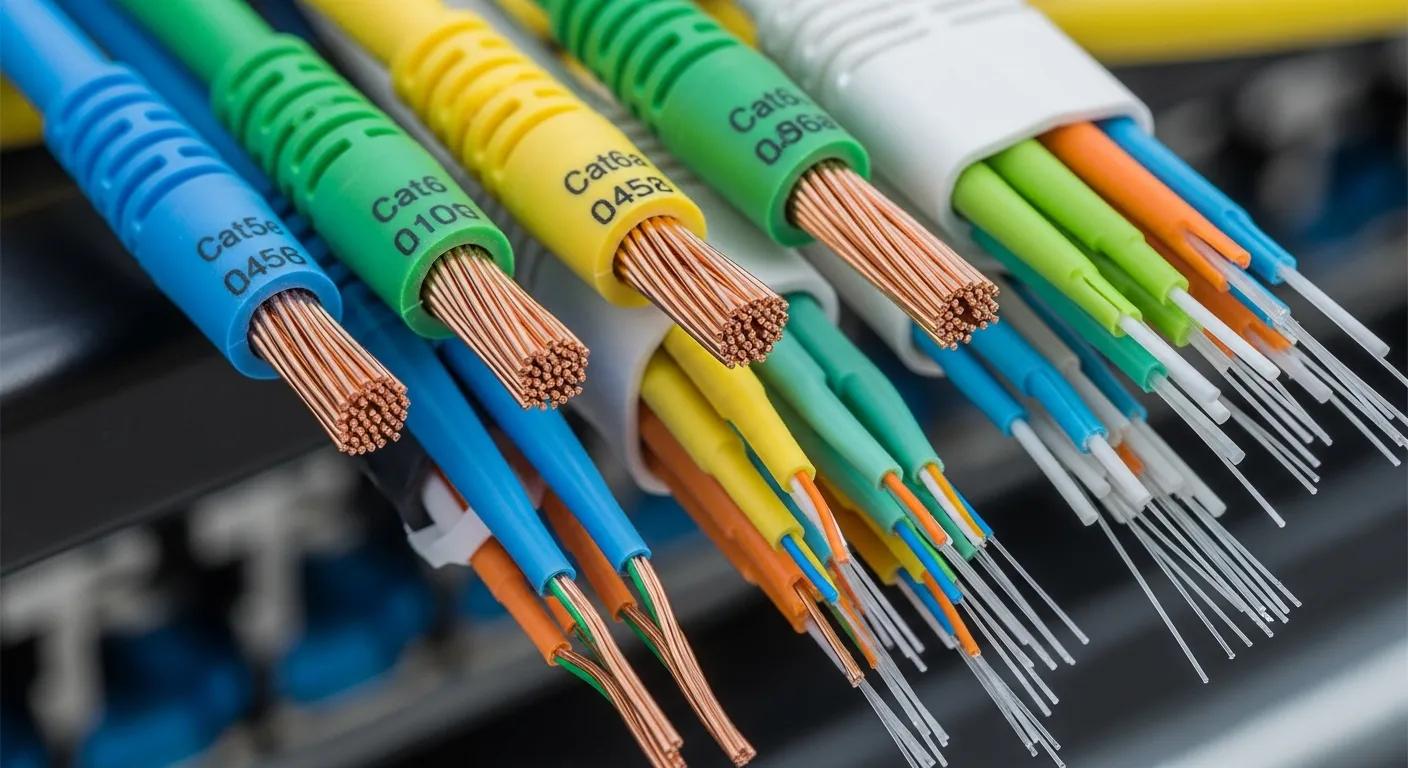
Installations in San Antonio use several cable classes depending on speed needs, distance, and budget. Each option balances performance and cost.
Cat5e Cabling: Reliable for up to 1 Gbps networks — a budget-friendly choice for basic data and voice traffic.
Cat6 Cabling: Supports up to 10 Gbps at shorter distances (about 55 meters/180 feet) and is a solid pick for higher-performance local networks.
Cat6a Cabling: Improved shielding and performance to handle 10 Gbps across full 100-meter (328 ft) runs — better for denser, noise-prone environments.
Fiber Optic Cabling: Best for long runs and very high bandwidth needs — ideal for backbone links, carrier handoffs, and high-speed internet connections.
Picking the right cable now affects speed, latency, and how easy it is to scale later — so choose with growth and use cases in mind.
How Does Choosing the Right Cable Type Impact Network Performance and Scalability?
Cable selection determines maximum throughput, signal integrity, and upgrade paths. Cat6 or fiber can reduce latency and support real-time applications; Cat6a extends 10 Gbps reach across typical building layouts. Investing in higher-grade cabling reduces the chance of rework as demands rise, letting your network scale without disruptive rip-and-replace projects.
What Is the Professional Installation Process for Structured Cabling?
How Does Strategic Planning Ensure Optimal Cable Pathways and Compliance?
Good planning maps efficient cable routes, limits interference, and ensures compliance with TIA/EIA and local codes. Planning includes site surveys, obstacle identification, and a pathway design that balances performance, safety, and serviceability — avoiding costly redesigns and ensuring the installation meets your operational needs.
What Are the Steps for QualityInstallation, Testing, and Documentation?

Installation: Run and terminate cables according to the plan, following bend-radius, separation, and labeling best practices so connections stay solid.
Testing: Verify each link with industry-standard testers for bandwidth, pair integrity, and signal loss — a must before putting the network into service.
Documentation: Deliver clear diagrams, labeling records, and test reports so future moves, adds, and troubleshooting are straightforward.
Follow these steps and you get a dependable cabling system that’s easy to maintain and expand.
What Benefits Does Structured Cabling Provide to San Antonio Businesses?
How Does Structured Cabling Enhance NetworkScalability, Reliability, and Speed?
Structured cabling creates a flexible platform for growth: adding new devices or services is faster and less disruptive. It reduces downtime by using standardized components and professional terminations, and higher-qualitycabling boosts throughput and reduces errors — all of which support productivity in fast-moving workplaces.
If you need help implementing these solutions, Evolution Technologies specializes in tailored installations for small and mid-sized San Antonio organizations. Our teams designcabling to match your current needs and future plans.
Client satisfaction matters to us — see what local businesses say on our client reviews page.
Ready to move forward? Schedule an appointment with Evolution Technologies to review your cabling needs and get a clear, practical plan.
Why Is Future-Proofing and Reduced Downtime Critical for Local Businesses?
Future-proofing limits the need for disruptive upgrades and keeps operations running when demand spikes or new services are adopted. Proper cabling cuts downtime risk, preserves employee productivity, and protects technology investments — key advantages for businesses competing in San Antonio’s market.
How Does Structured Cabling Support Regulated Industries in San Antonio?
What Compliance Requirements Are Addressed Through Professional Cabling?
Professional installations help meet regulatory expectations — for example, HIPAA for healthcare and PCI DSS for payment environments — by creating controlled, well-documented infrastructure for sensitive data. A compliant cabling layout reduces audit friction and helps protect against fines and data exposure.
How Does Structured Cabling Improve Security and Risk Reduction for Regulated Organizations?
Structured cabling provides a stable platform for security systems like IP cameras and access control. With reliable cabling and centralized management, organizations gain better visibility and control over physical and network security, lowering the risk of unauthorized access or data breaches.
How Is Structured Cabling Integrated with Modern IT Technologies?
How Does Structured Cabling Support PoE Devices, Wi-Fi Backhaul, and VoIP Systems?
Structured cabling supports Power over Ethernet (PoE) so devices such as IP cameras and VoIP phones receive power and data over the same run. It also provides the backhaul capacity for wireless access points and the low-latency connections needed for voice and real-time apps — essential for today’s unified communications.
What Role Does Structured Cabling Play in IP Security Camera and SurveillanceInfrastructure?
A solid cabling backbone ensures video streams arrive reliably and without packet loss, enabling real‑time monitoring and recorded evidence. Properly designed cabling supports high-resolution cameras and scalable storage without bandwidth bottlenecks.
Frequently Asked Questions
What factors should businesses consider when planning a structured cabling installation?
Plan around present and future bandwidth needs, the devices you expect to support, facility layout, and any industry-specific compliance requirements. Check existing infrastructure for constraints, set a realistic budget, and involve a professional early to avoid costly surprises.
How often should structured cabling systems be tested and maintained?
Perform a full certification test after installation and again whenever major changes occur. An annual review and targeted inspections after repairs or additions are a good practice to catch wear, labeling issues, or environmental problems before they cause outages.
What are the common challenges faced during structured cabling installation?
Typical challenges include working around existing construction, meeting local codes, coordinating with other trades, and minimizing business disruption. Structural limitations and tight budgets can also require creative planning. Experienced installers anticipate these issues and keep projects on track.
Can structured cabling installations be customized for specific business needs?
Yes. Installations are tailored to facility size, device counts, and application requirements. Customizations include cable category selection, pathway choices, and integration of PoE, wireless, or surveillancesystems to match operational goals.
What is the expected lifespan of structured cabling systems?
With quality materials and proper installation, cabling typically lasts 10–20 years. Regular maintenance and testing extend usable life, but businesses may upgrade sooner to support higher speeds or new applications.
How does structured cabling impact energyefficiency in a business?
Structured cabling enables PoE, which simplifies power delivery and can reduce the number of dedicated power points. Organized cabling also improves airflow around equipment and reduces energy lost to inefficient connections, contributing to lower operational costs.
Conclusion
Investing in professional structured cabling in San Antonio gives businesses a reliable, scalable foundation for current needs and future growth. By understanding components, cable types, and installation best practices, organizations can make smarter choices that improve uptime, speed, and compliance. If you want a cabling plan built for your operation, Evolution Technologies can help — schedule a consultation and we’ll map a practical path forward.
